DC Rock History
Join hosts Philip Basnight and Alex Vidales as they explore Washington, D.C.’s rich rock history. Each episode uncovers iconic albums and overlooked gems, featuring stories behind the music, the artists, and the evolving local scene. Whether you’re a longtime fan or new to the city’s musical legacy, this podcast shines a light on the sounds that shaped rock in the nation’s capital. email: dcrockpod@gmail.com





Episodes

Nov 17, 2025
Nov 17, 2025
1 hr 9 min
In this episode, we explore Perfect Teeth, the 1993 swan song from Unrest, a band that redefined what DC and Northern Virginia indie rock could be. Released on the legendary UK label 4AD, the album blended minimalist pop, rhythmic precision, and clean-toned experimentation into a concise, stylish statement that still resonates three decades later.
Formed in 1983 by Mark Robinson, Philip Krauth, and Tim Moran, Unrest began as a suburban basement band in Arlington, Virginia. Over the next ten years, they evolved into one of the most distinctive voices in American indie music. Alongside their own recordings, Robinson founded Teen-Beat Records, a label that combined DIY punk values with graphic design, eccentric curation, and a numbered catalog system that became iconic in its own right.
In this conversation, we’re joined by Mark Robinson, Unrest’s guitarist, co-vocalist, and Teen-Beat founder. We talk about the band’s formation in the early ’80s, the lo-fi cassette years, the arrival of bassist Bridget Cross, the band’s art-pop sensibility, and the bold recording decisions that led to Perfect Teeth including a 7-inch box set and a faux Simon Le Bon production credit. We also discuss how Unrest carved a lane completely their own within the broader DC scene.
Go Further:
4AD Records – Perfect Teeth
Teen-Beat Records
Wikipedia – Unrest (band)
Pitchfork – Perfect Teeth 30th Anniversary Review
Teen-Beat Archive – Perfect Teeth
Follow Us:
Social Media: @dcrockpod
Email: dcrockpod@gmail.com
Hosts:
Philip Basnight – Broke Royals
Alex Vidales – Pilot Waves
Podcast Artwork by Rebecca Basnight

Nov 10, 2025
Nov 10, 2025
1 hr 6 min
In this episode, we explore 13-Point Program to Destroy America, the 1991 debut album from Nation of Ulysses that turned DC’s post-hardcore scene on its head. Released by Dischord Records and recorded at Inner Ear Studios with Ian MacKaye and Don Zientara, the album fused punk, free jazz, and radical politics into a chaotic and satirical critique of American conformity.
Formed in 1988 by Ian Svenonius, James Canty, Steve Kroner, Steve Gamboa, and Tim Green, Nation of Ulysses presented themselves not just as a band, but as a “political party” advocating for youth liberation and creative revolution. With their sharp suits, manifesto-style lyrics, and explosive performances, they pushed the boundaries of what DC punk could sound and look like.
In this conversation, we’re joined by John R. Davis, musician, curator, and author of Keep Your Ear to the Ground: A History of Punk Fanzines in Washington, D.C. (Georgetown University Press). We discuss how Nation of Ulysses reflected and redefined the DC underground at the dawn of the 1990s bridging music, politics, and performance in a way that continues to influence artists today.
Go Further:
Dischord Records – 13-Point Program to Destroy America
Georgetown University Press – "Keep Your Ear To The Ground"
Wikipedia – Nation of Ulysees
Dance of Days by Mark Andersen and Mark Jenkins – Akashic Books
Follow Us:
Social Media: @dcrockpod
Email: dcrockpod@gmail.com
Hosts:
Philip Basnight – Broke Royals
Alex Vidales – Pilot Waves
Podcast Artwork by Rebecca Basnight

Nov 3, 2025
Nov 3, 2025
1 hr 6 min
In this episode, we explore 13 Songs, the seminal compilation that introduced Fugazi’s raw urgency and experimental edge to a wider audience. Originally released in 1989 by Dischord Records, 13 Songs combines the band’s first two EPs Fugazi (1988) and Margin Walker (1989) and stands as a defining document of the post–Revolution Summer era in Washington, D.C.
Formed by Ian MacKaye, Joe Lally, Brendan Canty, and later joined by Guy Picciotto, Fugazi built on the intensity of their hardcore roots while incorporating dub, minimalism, and socio-political critique into their sound. Recorded at Inner Ear Studios in Virginia and Southern Studios in London, the two EPs captured a band coming into their power, forging a sound that was at once confrontational and disciplined, spacious and relentless.
In this conversation, we’re joined by Jim Saah, the D.C.-based photographer and filmmaker whose iconic live shots helped define DC hardcore's visual legacy. We talk about the band’s early shows, the scene that gave rise to their sound, and how 13 Songs became a blueprint for the future of independent music.
Go Further:
Dischord Records – 13 Songs
Wikipedia – 13 Songs
Fugazi Live Series
Dance of Days by Mark Andersen and Mark Jenkins – Akashic Books
Follow Us:
Social Media: @dcrockpod
Email: dcrockpod@gmail.com
Hosts:
Philip Basnight – Broke Royals
Alex Vidales – Pilot Waves
Podcast Artwork by Rebecca Basnight

Oct 27, 2025
Oct 27, 2025
1 hr 1 min
In this episode, we explore Fire Party, the self-titled debut from one of the most groundbreaking bands to emerge from Washington, D.C.’s post–Revolution Summer punk scene. Formed in 1986 by Amy Pickering (vocals), Natalie Avery (guitar), Kate Samworth (bass), and Nicky Thomas (drums), Fire Party brought a new perspective to D.C. punk — politically charged, emotionally direct, and unapologetically their own.
Recorded at Inner Ear Studios with Don Zientara engineering and Ian MacKaye producing, the album captures the raw energy of late ’80s Dischord Records while pushing its sound into more melodic and introspective territory. The band’s 1988 European tour with Scream marked one of the first international tours for a Dischord act and solidified Fire Party’s reputation as both trailblazers and torchbearers of a more inclusive punk movement.
In this conversation, all four founding members reflect on the scene that shaped them, their first shows at D.C. Space, and how their music helped open the door for future generations of feminist and alternative punk artists.
Go Further:
Dischord Records – Fire Party
Wikipedia – Fire Party (band)
Dance of Days by Mark Andersen and Mark Jenkins – Akashic Books
Follow Us:
Social Media: @dcrockpod
Email: dcrockpod@gmail.com
Hosts:
Philip Basnight – Broke Royals
Alex Vidales – Pilot Waves
Podcast Artwork by Rebecca Basnight

Oct 20, 2025
Oct 20, 2025
47 min
In this episode, we dive into Embrace, the posthumously released self-titled album from one of the most pivotal bands of Washington, D.C.’s Revolution Summer movement. Though only active from 1985 to 1986, Embrace brought together vocalist Ian MacKaye (Minor Threat) with three former members of the Faith, guitarist Michael Hampton, bassist Chris Bald, and drummer Ivor Hanson, to create a record that helped redefine punk’s emotional and musical boundaries.
Our guest is Mark Jenkins, longtime D.C. writer and co-author of Dance of Days. Together, we explore how Embrace captured a moment of transition in the D.C. hardcore scene, why the album was released a year after the band broke up, and how it reflects the shift toward personal introspection, community-minded values, and experimentation during the mid-1980s.
We also look at Embrace’s role within the broader context of Revolution Summer, the media’s early attempts to label this new sound as “emocore,” and how the album connects the dots between Minor Threat’s raw energy and Fugazi’s expansive post-hardcore vision.
Go Further:
Dischord Records – Embrace
Wikipedia – Embrace (American band)
Dance of Days by Mark Andersen and Mark Jenkins – Akashic Books
Follow Us:
Social Media: @dcrockpod
Email: dcrockpod@gmail.com
Hosts:
Philip Basnight – Broke Royals
Alex Vidales – Pilot Waves
Podcast Artwork by Rebecca Basnight

Oct 6, 2025
Oct 6, 2025
1 hr 6 min
In this episode, we dive into Can I Say, the 1986 debut album from Dag Nasty - a record that helped define melodic hardcore and mark a turning point in Washington, D.C.’s punk history. Formed in 1985 by guitarist Brian Baker after the breakup of Minor Threat, Dag Nasty united veterans of the D.C. scene including Colin Sears, Roger Marbury, and vocalist Dave Smalley. Together, they bridged the aggression of hardcore with melody and introspection, creating a sound that would influence punk and emo for decades to come.
Our guests are Broke Royals, aka Philip's own band! Together, we explore how Can I Say balanced speed and precision with emotional depth, how it was recorded at Inner Ear Studios with Ian MacKaye producing and Don Zientara engineering, and why this album continues to resonate nearly forty years later.
We also look at Dag Nasty’s role within the second wave of Dischord Records bands, their connection to the evolving D.C. scene of the mid-1980s, and how Can I Say laid the groundwork for future generations of melodic punk and post-hardcore.
Go Further:
Dischord Records – Can I Say
AllMusic – Dag Nasty
"Dance of Days" by Mark Andersen and Mark Jenkins - Akashic Books
Follow Us:
Social Media: @dcrockpod
Email: dcrockpod@gmail.com
Follow Us:
Philip Basnight – Broke Royals
Alex Vidales – Pilot Waves
Podcast Artwork by Rebecca Basnight

Sep 29, 2025
Sep 29, 2025
1 hr 14 min
In this episode, we explore Rites of Spring, the 1985 self-titled release that intertwined with Revolution Summer and reshaped the direction of punk in Washington, D.C. and beyond. Rites of Spring formed in 1984 with Guy Picciotto (vocals, guitar), Eddie Janney (guitar), Mike Fellows (bass), and Brendan Canty (drums). The band built on the foundation of hardcore but infused their songs with personal and emotional intensity, creating a record that is often cited as a cornerstone of post-hardcore and what would later be labeled “emo.”
Our guest is Mark Andersen, co-founder of Positive Force DC and co-author of Dance of Days: Two Decades of Punk in the Nation’s Capital. Mark shares his first-hand experiences of seeing Rites of Spring live, the atmosphere of the D.C. punk community in 1985, and the ways in which the band’s performances helped spark a new sense of purpose in the scene. Together, we discuss how Rites of Spring’s music reflected a moment of transition, carrying forward the urgency of hardcore while opening space for vulnerability and connection.
We also examine the album’s recording at Inner Ear Studios with Don Zientara and Ian MacKaye, the relationship of the band to contemporaries like Embrace and Beefeater, and the enduring influence of Rites of Spring as a defining work in D.C.’s underground history.
Go Further:
Dischord Records – Rites of Spring
AllMusic – Rites of Spring
Follow Us:
Social Media: @dcrockpod
Email: dcrockpod@gmail.com
Philip Basnight – Broke Royals
Alex Vidales – Pilot Waves
Mark Andersen – Dance of Days, Positive Force DC
Podcast Artwork by Rebecca Basnight

Sep 22, 2025
Sep 22, 2025
1 hr 13 min
In this episode, we explore No Policy, the 1981 EP by SOA, and Damaged, the legendary debut LP from Black Flag. Formed in Washington, D.C. by Henry Garfield (later Henry Rollins), Michael Hampton, Wendel Blow, and Simon Jacobsen, SOA delivered ten tracks in just over eight minutes, capturing the urgency and fury of the early D.C. hardcore scene. Released as Dischord Records’ second-ever release, No Policy marks Rollins’ first recorded appearance—raw, unrelenting, and full of promise.
We then follow Rollins’ transformation from a Georgetown ice cream shop worker to frontman of Black Flag. After jumping on stage at a New York City show in 1981, he was recruited to join the West Coast hardcore pioneers. The result, Damaged, is a cornerstone of American punk and a brutal, poetic chronicle of alienation, rage, and inner turmoil.
Our guest is Jackson Sinnenberg, who helps us unpack the rapid evolution of Rollins’ voice, stage presence, and creative philosophy. Together, we explore the shared DNA of No Policy and Damaged, and how one D.C. kid’s journey helped fuse two punk scenes into a national hardcore movement.
Go Further:
Dischord Records – SOA – No Policy
Wikipedia – Black Flag (band)
Henry Rollins – Wikipedia
"Dance of Days" - Akoshic Books
Follow Us:
Social Media: @dcrockpod
Email: dcrockpod@gmail.com
Philip Basnight – Broke Royals
Alex Vidales – Pilot Waves
Jackson Sinnenberg – WAMU || Capitol Bop
Podcast Artwork by Rebecca Basnight

Jun 16, 2025
Jun 16, 2025
1 hr 2 min
In this episode, we explore Too Many Humans and Teen Love, the 1983 release from No Trend that challenged both punk and mainstream sensibilities in DC’s underground scene. No Trend was from from Ashton, Maryland consisting of Jeff Mentges (vocals), Frank Price (guitar), Bob Strasser (bass), and Michael Salkind (drums). They took a confrontational approach to music, combining minimal, abrasive instrumentation with lyrics that satirized social norms and punk culture alike.
Our guest is Chris Richards, pop music critic for The Washington Post and founding member of Q and Not U. Chris shares his perspective on No Trend’s impact and the broader context of the DC scene in the early 1980s. Together, we discuss how No Trend’s approach to music and performance reflected a unique moment in DC’s hardcore history, bridging experimental sounds and an anti-conformist ethos.
We also examine the band’s recording process at Inner Ear Studios, their relationship to the wider DC scene, and the legacy of Too Many Humans and Teen Love as defining works in the city’s underground music history.
Sponsor:
Get 10% off New Columbia Record Club with checkout code DCROCKS
Go Further:
AllMusic – No Trend
Touch and Go Records – No Trend
Follow Us:
Social Media: @dcrockpod
Email: dcrockpod@gmail.com
Philip Basnight - Broke Royals
Alex Vidales - Pilot Waves
Chris Richards - Washington Post
Podcast Artwork by Rebecca Basnight
Jun 9, 2025
Jun 9, 2025
1 hr 1 min
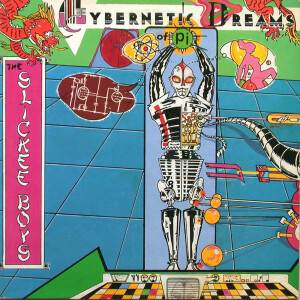
In this episode, we explore Cybernetic Dreams of Pi, the 1983 release from The Slickee Boys that blends garage rock revivalism with punk attitude and sci-fi themes. The Slickee Boys had been a fixture in the DC music scene since the mid-1970s, building a dedicated following with their irreverent stage shows and DIY approach to recording. With a lineup featuring Mark Noone on vocals, Kim Kane and Marshall Keith on guitars, Dan Palenski on drums, and John Chumbris on bass, the band delivered an album that balanced catchy hooks with an adventurous spirit.
Our guest is Don Zientara, founder of Inner Ear Studios and one of DC’s most influential recording engineers. Don shares insights on working with The Slickee Boys and the recording of Cybernetic Dreams of Pi, as well as the role of Inner Ear Studios in shaping the sound of DC’s music scene. Together, we discuss how The Slickee Boys’ album fits within the broader story of DC rock, from their early DIY singles to their lasting influence on the city’s underground music community.
We also examine the album’s production process, the impact of Inner Ear Studios on the DC scene, and how The Slickee Boys helped expand the boundaries of what punk rock could be in the nation’s capital.
Sponsor:
Get 10% off New Columbia Record Club with checkout code DCROCKS
Go Further:
Don Zientara – Inner Ear Studios
Dance of Days by Mark Andersen and Mark Jenkins
Trouser Press – The Slickee Boys
Follow Us:
Social Media: @dcrockpod
Email: dcrockpod@gmail.com
Philip Basnight - Broke Royals
Alex Vidales - Pilot Waves
Don Zientara - Inner Ear Studios
Podcast Artwork by Rebecca Basnight